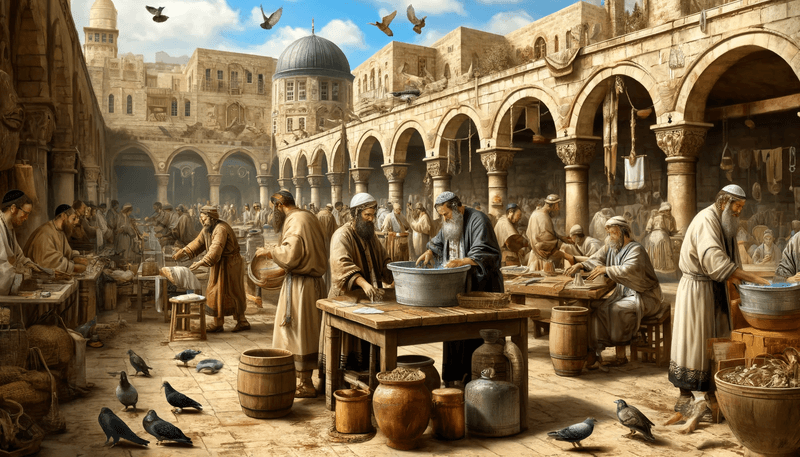
This week, we delve into the fascinating world of Parashat Metzora, a portion of the Torah that continues the discussion from the previous parasha, Tazria, focusing on the laws of purity and impurity, particularly concerning tzara'at (often translated as leprosy but more accurately a spiritual malady with physical symptoms). While at first glance, these ancient laws might seem distant and irrelevant, a deeper exploration reveals timeless lessons on human behavior, social responsibility, and the power of speech.
The parasha opens with the purification process for a person (metzora) who has been afflicted with tzara'at. This process is intricate, involving offerings, the use of two birds, cedarwood, scarlet yarn, and hyssop. The ritual underscores the theme of transformation and renewal, as the afflicted individual is reintegrated into the community. This process is not only about physical healing but also about spiritual rehabilitation and the restoration of social harmony.
Parashat Metzora also addresses the tzara'at of houses, a phenomenon that prompts us to consider the health and sanctity of our living spaces. The Torah's approach to a seemingly physical condition in the fabric of a home invites reflection on the impact of our environments on our spiritual and emotional well-being.
One of the most compelling aspects of Parashat Metzora is its implicit commentary on the power of speech. The sages connect tzara'at to lashon hara (evil speech), suggesting that the affliction comes as a consequence of gossip, slander, and other harmful uses of language. This connection highlights the destructive potential of speech and the importance of using our words to build rather than destroy.
In exploring Parashat Metzora, we are reminded of the profound interconnectedness of physical and spiritual health, individual and community well-being, and the impact of our actions and words on the world around us. The parasha challenges us to reflect on our behavior, to purify our speech, and to strive for a more harmonious and sanctified life.
Created by Rabbi Ari (AI)